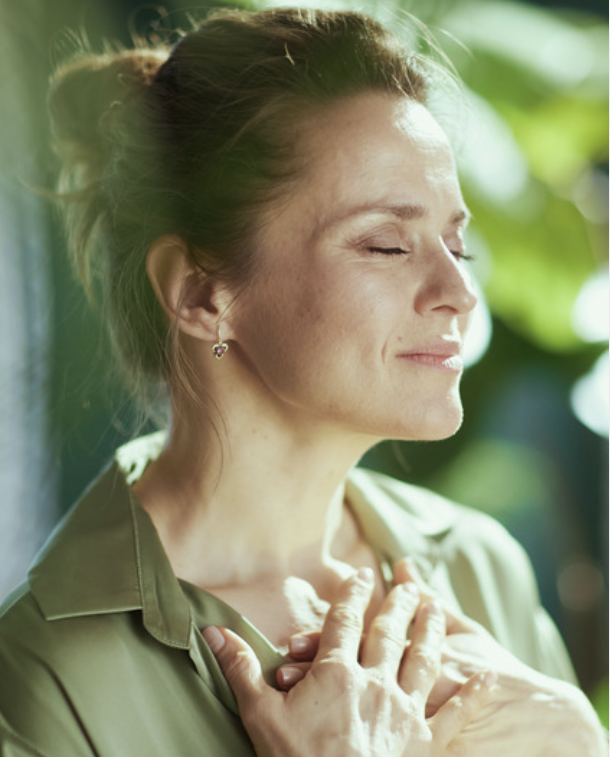
You feel something, but it will not move. Maybe it shows up as a wall between you and the people you love. Maybe it is a flatness where feelings used to be. Whatever it looks like, the sense is the same. Something inside you will not move, and no amount of understanding seems to shift it. That experience has a name. Understanding what is truly happening changes how you approach it.
What Is an Emotional Blockage?
An emotional blockage is what happens when an emotion your body starts to process never got to finish. The feeling did not resolve and disappeared. It got held, stored in your nervous system as an unfinished pattern, and now it sits between you and the free movement of your emotional life.
I want to be careful with the word, because it gets used loosely. An emotional blockage is not a character flaw or a sign that you are broken. It is not you being bad at feelings. It is a physiological state. At some point your system met an emotion it could not fully complete, because the moment overwhelmed you or you were too young to process it. So your body did the sensible thing. It filed the emotion away for later. Later never came, and the pattern stayed live, waiting.
This is why a blockage can feel so confusing. You are not choosing it. You are living with the residue of something your nervous system could not finish, and it keeps shaping how you feel now.
What an Emotional Blockage Feels Like
Blockages do not announce themselves as blockages. They show up as the texture of your days.
For some it feels like numbness. The volume of feeling turns down, and even good moments arrive muffled. For others it is the opposite. Emotions flood in far stronger than the situation calls for, and a small trigger sets off a reaction that surprises even you. Many notice avoidance. You steer around certain conversations and people, because some part of you senses the charge waiting there.
It can also live in the body directly. Tightness in the chest. A stomach that clenches for no reason. A jaw that will not unlock. These are not separate from the pattern. They are the pattern, speaking in the only language the body has.
None of this means something is wrong with you. It means an emotion is asking to be completed, and until it is, it keeps knocking.
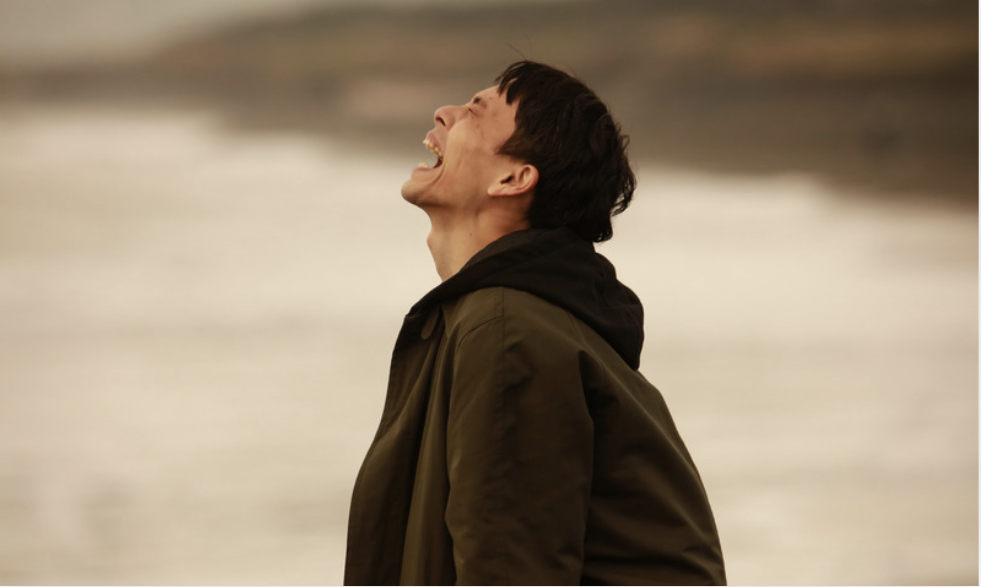
Why Emotional Blockages Happen
Here is where the nervous system view matters. I lean on what effective neuroscience has taught us. Researchers like Antonio Damasio and Lisa Feldman Barrett describe the brain as a prediction machine, one that draws on everything you have ever lived through to forecast what is coming and to prepare your body in advance, often well before you are consciously aware of anything.
When you meet an experience your system cannot process in the moment, the charge does not vanish. It gets stored. Your brain, ever the forecaster, begins predicting similar threats and readying you to react, long after the original moment has passed. That is a blockage in the making. Not a memory you can talk through, but a live prediction your body keeps running.
The origins are usually early. A caregiver who could not meet your feelings. A frightening event with no one to help you make sense of it. Years of learning that certain emotions were not safe to show. In each case your body registered a strong charge and, lacking a way to complete it, held on. This is also why the same reaction can keep returning no matter what you try, something I explore in this post on repeating emotional patterns, and it is the reason insight alone so rarely dissolves the pattern.
Why Coping and Insight Often Are Not Enough
Most of what we are taught to do with a blockage works on the surface. Understand your triggers. Name the feeling. Push through the avoidance. These things have real value, and I would never wave them away, because getting through a hard day is its own accomplishment when a blockage is running.
But managing a blockage is not the same as resolving it. When you cope, the emotional charge underneath does not move. It stays. You get better at carrying it, or working around it, and it waits for the next trigger. This is the difference between regulation and resolution, a distinction I explore in Why Regulation Isn't Enough. Insight can show you the shape of the block. It cannot, by itself, complete the emotion your body never finished, because the block does not live in your thoughts. It lives in your body.
How an Emotional Blockage Resolves
If a blockage is an unfinished emotional pattern held in the body, then that is exactly where it can complete. Each of us carries an innate biological capacity to resolve these patterns. It does not run through analysis or willpower. It runs through physical sensation, through a process I call viscero-somatic quieting.
Rather than thinking your way past the block, you turn your attention toward the physical sensations that arise: the tightness, the heat, the pressure. You stay present with them, without analyzing or fixing. Given that kind of steady attention, your nervous system can do what it could not do before. It completes the cycle. The charge eases, and the pattern loses its grip. This is the foundation of Emotional Resolution sessions, and you can read more on the page describing what Emotional Resolution is.
I want to be honest rather than sweeping about outcomes. Every person and pattern is different, and I cannot promise a particular result. What people commonly describe, though, is that a trigger which used to reliably set them off stops landing the way it did. Not because they brace against it better. Because the thing generating the reaction has eased from the inside.
A Gentler Way to Understand Yourself
If you recognize yourself here, I hope it lands as relief rather than one more thing to fix. A blockage is not evidence that you are damaged. It is evidence that you are human, that you once met more than you could process, and that a part of you is still waiting to finish. That waiting can end.
If you are curious whether Emotional Resolution might help you move through a pattern that has held on for a long time, I warmly invite you to schedule a free consultation. We can talk about what you are experiencing and explore whether this process is a fit for you.